







NVIDIA’s new DLSS 5 gen AI tech replaces in-game visuals with AI slop-like image quality
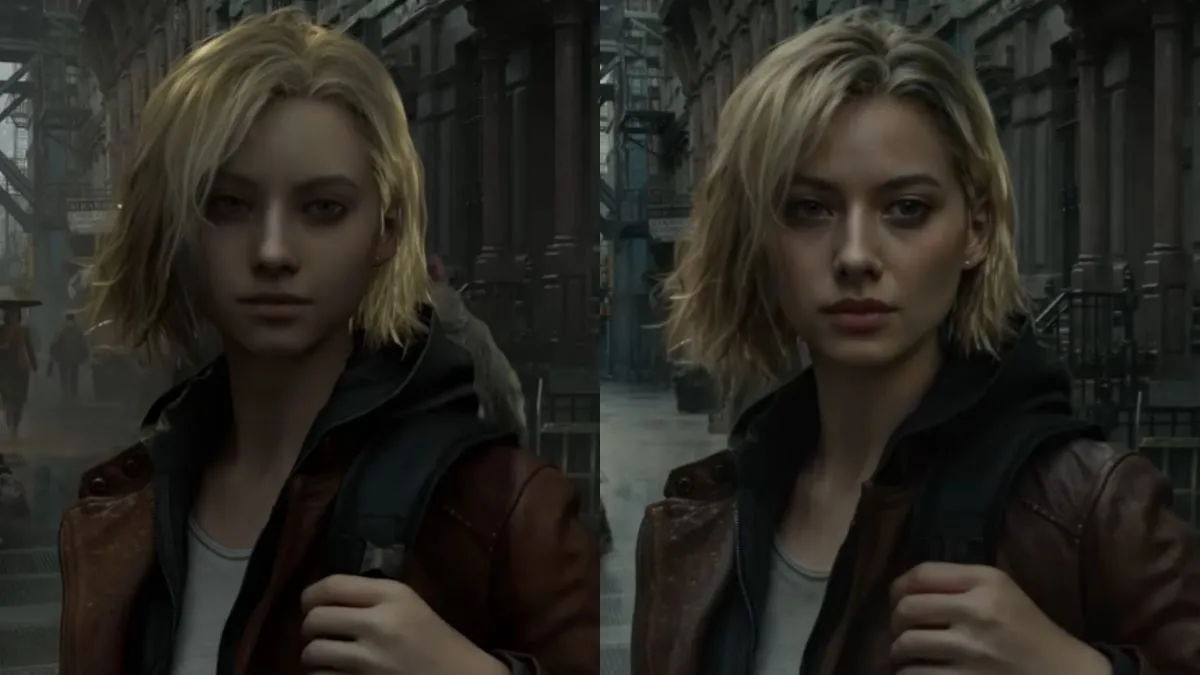
Next-gen game visuals is looking bleak.
Tech giant NVIDIA has announced and shown off DLSS 5 at GTC 2026, its newest tech in a lineup designed to upscale game graphics. However, the product has quickly ticked off players online, as it integrates what is often referred to as ‘AI slop’-like visuals into the next generation of graphics, using generative AI to overlay in-game visuals.
DLSS 5 announced with new generative AI technology
The NVIDIA DLSS 5 is the next generation of NVIDIA’s Deep Learning Super Sampling (DLSS) technology. Its predecessors helped upscale resolutions, generate frames, and improve ray tracing in games–but this latest edition takes things a step further. Perhaps even a step too far, if reactions online are anything to go by.
DLSS 5 introduces real-time generative AI that reworks visuals and adds photorealistic lighting, making scenes appear more realistic based on factors such as lighting, colour, motion data, and more. Rather than simply improving visuals, the new technology effectively replaces them with what the AI interprets as a more realistic version.
The technology is trained to process complex visual elements such as hair, skin, and delicate materials like sheer fabric, as well as their interactions with lighting and movement, in order to make them appear closer to real life. It can process these elements at resolutions of up to 4K.
NVIDIA CEO Jensen Huang described DLSS 5 as “the GPT moment for graphics”, saying it “blends hand-crafted rendering with generative AI to deliver a dramatic leap in visual realism”.
An hour after the announcement went live, NVIDIA pinned a follow-up comment under its YouTube video, essentially stating that game developers have full control of how the DLSS5 affects their game visuals and emphasised that it is “not a filter”. The statement reads:
“Important to note with this technology advance – game developers have full, detailed artistic control over DLSS 5’s effects to ensure they maintain their game’s unique aesthetic. The SDK includes things like intensity, color grading and masking off places where the effect shouldn’t be applied. It’s not a filter – DLSS 5 inputs the game’s color and motion vectors for each frame into the model, anchoring the output in the source 3D content.”
Gamers slam NVIDIA DLSS 5’s generative AI tech
Anything involving generative AI will hardly go by without criticism, but the negative reception intensified further after users saw the example footage released by NVIDIA, which is horrifying, to say the least.
Using clips from the recent hit Resident Evil: Requiem and other high-end games, NVIDIA compared the before-and-after visuals using DLSS 5 and to no one’s surprise, the generative AI-fuelled enhancements lead to an end product that looks like AI slop.
Characters’ faces are heavily altered, with the effect seemingly giving some of them deeper double eyelids, brighter skin tones, fuller and more saturated lips, deeper wrinkles, and other altered facial featured in the example footage. It almost feels like DLSS 5 has simply applied the then-viral ‘Bold Glamour’ filter across these games, stripping away much of the original art style and transforming the characters into distinctly different versions of themselves.
To many viewers, the DLSS 5 effect also looks similar to the wave of AI-generated “slop” content that has spread across the internet in recent years, with uncanny almost-realistic visuals, irregular eye movements, and other unsettling characteristics.
“This looks horrifically bad. Nobody wants an AI slop filter on top of their games,” one comment responding to the NVIDIA announcement said, ratio-ing the announcement with over 60,000 likes compared with the post’s 40,000.
“Artists spend hours perfecting a model for you to come along and replace it with AI faces? I seriously hate this so much,” another commenter wrote in response to the footage.
More backlash followed as users reposted the announcement, with one stating, “This is taking the artistry out of games,” and another adding, “I can’t believe Nvidia looked at this ‘AI on top of games filter’ and said to themselves, ‘This is the future of gaming.’”
However, as is often the case with major companies in the gaming industry, NVIDIA will likely proceed with this tech despite the backlash. DLSS 5 is scheduled to launch in fall 2026, and will be supported by major publishers like Bethesda and Capcom.
DLSS 5 will be available for a variety of games, including Where Winds Meet, Assassin’s Creed Shadows, Delta Force, NTE: Neverness to Everness, and others.